
Harnessing Artificial Intelligence to Perfect Mare and Stallion Matches for Top AQHA Cow Prospects
Matching the right mare with the right stallion has always been a critical factor in breeding top-quality American Quarter Horses (AQHA), especially those destined to excel as cow prospects. Traditionally, breeders relied on experience, pedigree knowledge, and physical evaluation to make these decisions. Today, The Iron D is transforming this process by using artificial intelligence (AI) to improve breeding outcomes. This approach helps identify the best genetic combinations to produce horses with the ideal traits for working cattle and competing in AQHA events.
How AI Enhances Breeding Decisions
Artificial intelligence uses data-driven algorithms to analyze vast amounts of information that would be impossible for humans to process quickly. In the context of horse breeding, AI evaluates genetic markers, performance records, conformation traits, and even temperament indicators. This comprehensive analysis allows breeders to predict which mare and stallion pairings are most likely to produce offspring with superior cow sense, athleticism, and trainability.
The Iron D’s AI system collects data from multiple sources:
Genetic profiles of mares and stallions, including lineage and inherited traits
Performance history in AQHA competitions and working cattle environments
Physical characteristics such as muscle structure, bone density, and movement patterns
Behavioral tendencies that influence trainability and cow work aptitude
By combining these factors, the AI model generates compatibility scores and breeding recommendations tailored to the specific goals of producing top AQHA cow prospects.
Benefits of Using AI in Breeding Programs
Using AI in breeding offers several advantages over traditional methods:
Increased accuracy in predicting desirable traits, reducing guesswork
Faster decision-making by processing complex data quickly
Identification of hidden genetic strengths that may not be obvious through visual inspection
Better management of genetic diversity to avoid inbreeding and maintain healthy bloodlines
Improved consistency in producing high-quality offspring suited for cow work
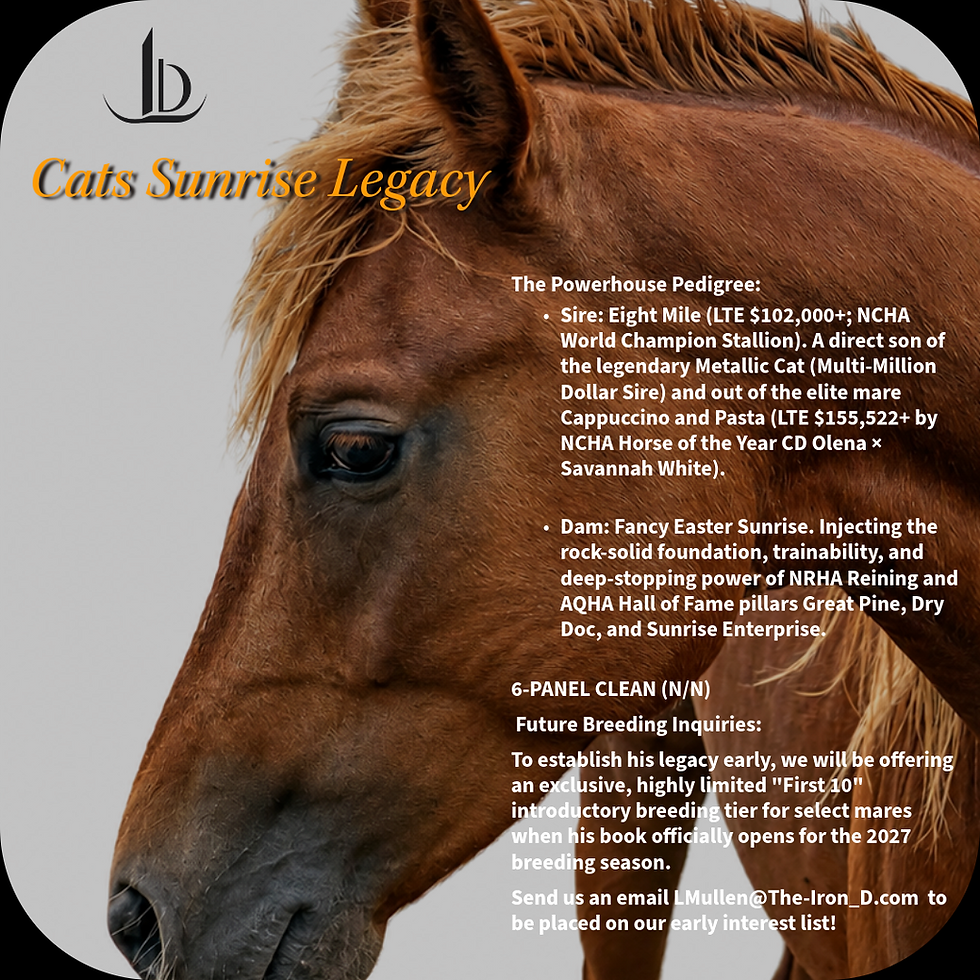
For example, Selecting Eight Mile (LTE 102,000+; NCHA World Champion Stallion. A direct sone of legendary Metallic Cat (Multi-Million-Dollar Sire) and of the elite mare Cappuccino and Past (LET 155,522+ by NCHA Horse of the Year CD Olena x Savannah White), to breed with our mare Fancy Easter Sunrise, injecting the rock-solid foundation, trainability, and deep-stopping power of NRHA Reining and AQHA Hall of Fame pillars, Great Pine, Dry Doc, and Sunrise Enterprise.
The AI predicted that we would get a longer legged and taller foal with a shorter back. Standing at 15.1 we have a leggy 2-yo with a big stride, quick turn, good mind, and cowy as heck. The AI nailed the outcome.
Practical Steps in AI-Assisted Breeding
Implementing AI in a breeding program involves several key steps:
Data Collection
Gather detailed information on each mare and stallion, including genetic tests, competition results, and physical evaluations.
Data Input and Analysis
Feed the data into the AI platform, which uses machine learning algorithms to analyze compatibility and predict offspring traits.
Review Recommendations
Breeders review AI-generated matches and consider additional factors such as temperament and breeding goals.
Make Informed Pairings
Select the best mare and stallion combinations based on AI insights and breeder expertise.
Monitor Outcomes
Track the performance of offspring to refine AI models and improve future predictions.
This process allows breeders to make more informed choices and increase the likelihood of producing AQHA cow prospects with the right balance of speed, intelligence, and cow sense.
Real-World Impact on AQHA Cow Prospects
The Iron D’s use of AI has already shown promising results in our prospects, showing good minds and trainability. These horses often display:
Quick reflexes to respond to cattle movements
Strong work ethic and willingness to engage with cattle
Balanced conformation for agility and endurance
Stable temperament that supports training and competition
Challenges and Considerations
While AI offers many benefits, breeders should keep in mind:
Data quality matters: Accurate and comprehensive data is essential for reliable AI predictions.
AI complements, not replaces, human expertise: Breeders’ knowledge and intuition remain vital in interpreting AI recommendations.
Ethical breeding practices: Maintaining genetic diversity and animal welfare should always guide breeding decisions.
Continuous learning: AI models improve over time as more data becomes available, so ongoing monitoring is important.
By balancing AI insights with traditional breeding wisdom, The Iron D creates a more effective and responsible breeding program.
Looking Ahead: The Future of AI in Horse Breeding
The integration of AI in breeding programs like The Iron D’s signals a shift toward more precise and data-driven approaches in the equine industry. As technology advances, breeders can expect:
More detailed genetic analysis, including epigenetic factors
Enhanced prediction of behavioral traits linked to cow work
Integration of environmental and management data to optimize breeding outcomes
Wider adoption of AI tools across AQHA and other horse breeding communities
These developments will help breeders produce horses that meet the evolving demands of competitive cow work and AQHA standards.


Comments